HSK 1
HSK 1 · App lesson 21
15-25 min 6 words Official 9.2/2 8 sections

Read and write characters, then say when class starts and ends. This is also a review after three official lessons.

New HSK Course 1, official lesson 9, part 2 of 2.
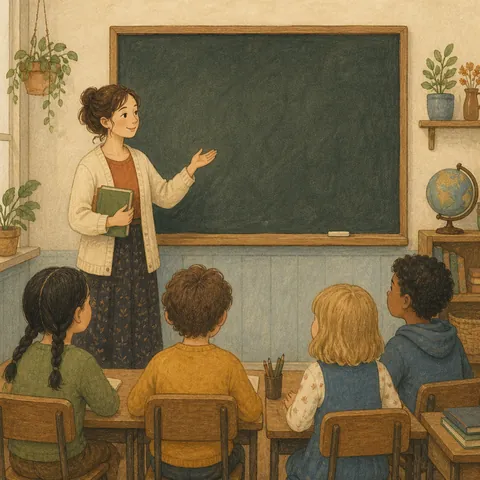
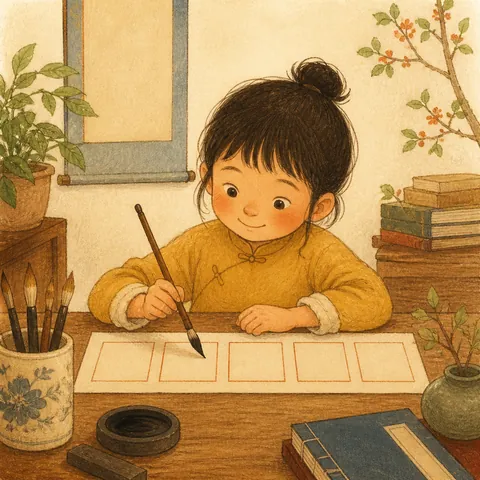
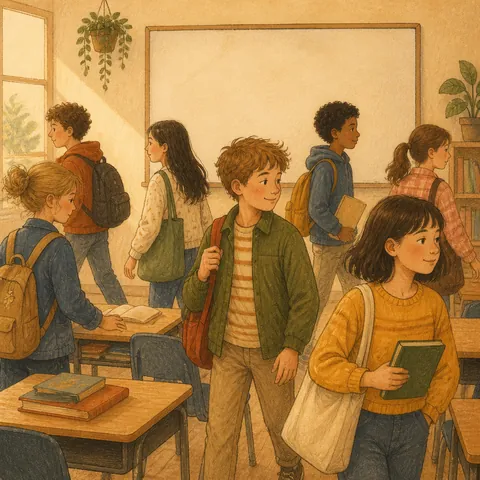
A teacher writing Chinese characters on the board as class begins
Vocabulary overview

First, see the whole set.

Finish the school scene by reading, writing, and marking the start and end of class.

Vocabulary 01 / 06
01 A friendly illustration showing to read
()

to read

Model sentence
What to notice

读 plus 书 is a common study action.

Try it

Keep 读书 together.

Vocabulary 02 / 06
02 A friendly illustration showing to write
(xiě)

to write

Model sentence
What to notice

写 needs something after it, such as 字.

Try it

Practice 写字.

Vocabulary 03 / 06
03 A friendly illustration showing character
()

character; word

Model sentence
What to notice

字 is one written character.

Try it

Point with 这 and ask 什么.

Vocabulary 04 / 06
04 A friendly illustration showing Chinese character
(hàn)()

Chinese character

Model sentence
What to notice

汉字 are the characters of written Chinese.

Try it

Hear 汉, then 字.

Vocabulary 05 / 06
05 A friendly illustration showing to attend class
(shàng)()

to attend class; class begins

Model sentence
What to notice

上课 is like 上班, but for class.

Try it

Put time before 上课.

Vocabulary 06 / 06
06 A friendly illustration showing class is over
(xià)()

class is over

Model sentence
What to notice

下课 is like 下班, but for class.

Try it

Pair it with 上课.

Vocabulary match

Connect word, pinyin, and meaning.

Pick one item from each column. When all three belong together, they lock in as a match.

Word
    Pinyin
      Meaning
        Grammar

        Two patterns hold the lesson together.

        上课 and 下课 follow the same up-and-down idea as 上班 and 下班.

        Grammar 01 / 02
        time + 在 + place + verb

        Time plus place

        Say when first, then where with 在, then the action. 明天上午在学校学习 follows this order.

        Grammar 02 / 02
        上课 / 下课

        Starting and finishing class

        上课 means class begins. 下课 means class ends. They work like 上班 and 下班.

        Writing drill

        Type your answer.

        Translate: I read books.

        Keep 读书 together.

        Writing drill 02 / 02

        Type your answer.

        Write the Chinese word for "class is over".

        下课 is like 下班, but for class.

        Reading practice

        Continue in order when you can. You can also open any app lesson whenever it is useful.

        (kāi)(shǐ)(shàng)()

        Class begins

        老师(lǎoshī)(shàng)()(shàng)()()(shū)(ba)

        (xiǎo)()()(xiě)(hàn)()(zhè)()()(shì)(shén)(me)

        ()(wén)(zhè)(shì)(hàn)()

        老师(lǎoshī)(zhōng)()(xià)()

        Reading check

        Did you follow the story?

        Choose the best answer for each question.

        Question 1: When does class begin?
        Question 01

        When does class begin?

        Question 2: What does 小语 write?
        Question 02

        What does 小语 write?

        Writing practice

        Write a full sentence.

        Write one sentence saying class ends at noon.

        Official self-assessment

        Review official lessons 1 to 3.

        Type your answer in Chinese or English where it fits.

        Review official lesson 7: How do you say you finish work at 6:30 in the evening?

        Official self-assessment 02 / 03

        Review official lessons 1 to 3.

        Type your answer in Chinese or English where it fits.

        Review official lesson 8: How do you say your father also works at a hospital?

        Official self-assessment 03 / 03

        Review official lessons 1 to 3.

        Type your answer in Chinese or English where it fits.

        Review official lesson 9: How do you say you study at school tomorrow morning?

        Lesson complete

        Nice work finishing this part.

        You have reached the textbook self-assessment point. Take a moment to review official lessons 1 to 3 before continuing.

        Would you like more lessons like this one?