HSK 2
HSK 2 · App lesson 12
15-25 min 6 words Official 6.2/2 8 sections

Order coffee or milk tea, name a restaurant or hotel, dance, and say it is interesting. This is also a review after three official lessons.

New HSK Course 2, official lesson 6, part 2 of 2.

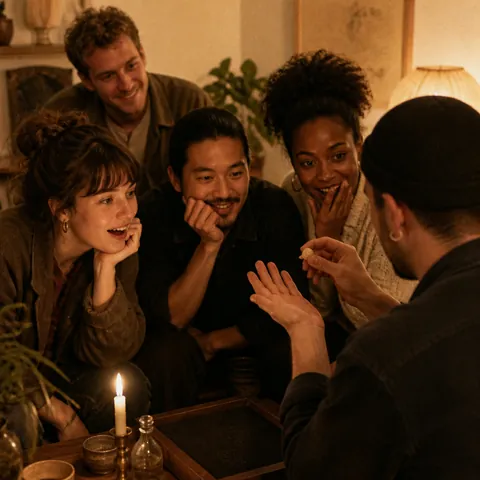
Friends dancing and drinking milk tea at a warm restaurant birthday gathering
Vocabulary overview

First, see the whole set.

The birthday continues at a restaurant. These six words name drinks, places, and fun.

Vocabulary 01 / 06
01 A friendly illustration showing coffee
咖(kā)啡(fēi)

coffee

Model sentence
What to notice

咖啡 is coffee.

Try it

Practice 喝咖啡.

Vocabulary 02 / 06
02 A friendly illustration showing milk tea
奶(nǎi)茶(chá)

milk tea

Model sentence
What to notice

奶茶 is milk tea.

Try it

Compare it with 咖啡.

Vocabulary 03 / 06
03 A friendly illustration showing restaurant
饭(fàn)馆(guǎn)

restaurant

Model sentence
What to notice

饭馆 is a restaurant, a little more everyday than 饭店.

Try it

Hear 饭, then 馆.

Vocabulary 04 / 06
04 A friendly illustration showing hotel
酒(jiǔ)店(diàn)

hotel

Model sentence
What to notice

酒店 can be a hotel, or a larger place for a meal.

Try it

Hear 酒, then 店.

Vocabulary 05 / 06
05 A friendly illustration showing to dance
跳(tiào)舞(wǔ)

to dance

Model sentence
What to notice

跳舞 is dancing.

Try it

Practice 去跳舞.

Vocabulary 06 / 06
06 A friendly illustration showing interesting
有(yǒu)意(yì)思(sī)

interesting; fun

Model sentence
What to notice

有意思 describes something that holds your attention in a good way.

Try it

Put 很 before 有意思.

Vocabulary match

Connect word, pinyin, and meaning.

Pick one item from each column. When all three belong together, they lock in as a match.

Word
    Pinyin
      Meaning
        Grammar

        One pattern holds the lesson together.

        有意思 looks back at the whole gathering: dancing, drinks, and the hotel meal.

        Grammar 01 / 01
        有意思

        An interesting gathering

        有意思 describes something that feels interesting or fun. Use it after a place or an activity: 跳舞很有意思.

        Writing drill

        Type your answer.

        Translate: I drink coffee.

        Practice 喝咖啡.

        Writing drill 02 / 02

        Type your answer.

        Write the Chinese word for "interesting".

        有意思 describes something that holds your attention in a good way.

        Reading practice

        Continue in order when you can. You can also open any app lesson whenever it is useful.

        有(yǒu)意(yì)思(sī)

        Drinks and dancing

        安(ān)娜(nà):我(wǒ)们(men)去(qù)饭(fàn)馆(guǎn)吧(ba)。我(wǒ)喝(hē)奶(nǎi)茶(chá)。

        马(mǎ)克(kè):我(wǒ)喝(hē)咖(kā)啡(fēi)。酒(jiǔ)店(diàn)也(yě)可(kě)以(yǐ)。

        小(xiǎo)李(lǐ):小(xiǎo)雪(xuě)喜(xǐ)欢(huān)跳(tiào)舞(wǔ)。

        安(ān)娜(nà):跳(tiào)舞(wǔ)很(hěn)有(yǒu)意(yì)思(sī)。生(shēng)日(rì)很(hěn)快(kuài)乐(lè)。

        Reading check

        Did you follow the story?

        Choose the best answer for each question.

        Question 1: What does 安娜 drink?
        Question 01

        What does 安娜 drink?

        Question 2: What does 小雪 like?
        Question 02

        What does 小雪 like?

        Writing practice

        Write a full sentence.

        Write one sentence saying dancing is interesting.

        Official self-assessment

        Review official lessons 1 to 3.

        Type your answer in Chinese or English where it fits.

        Review official lesson 4: How do you say these pants are pretty nice?

        Official self-assessment 02 / 03

        Review official lessons 1 to 3.

        Type your answer in Chinese or English where it fits.

        Review official lesson 5: How do you politely ask someone to come in?

        Official self-assessment 03 / 03

        Review official lessons 1 to 3.

        Type your answer in Chinese or English where it fits.

        Review official lesson 6: How do you wish 小雪 a happy birthday?

        Lesson complete

        Nice work finishing this part.

        You have reached the textbook self-assessment point. Take a moment to review official lessons 1 to 3 before continuing.

        Would you like more lessons like this one?