包包子
Making buns
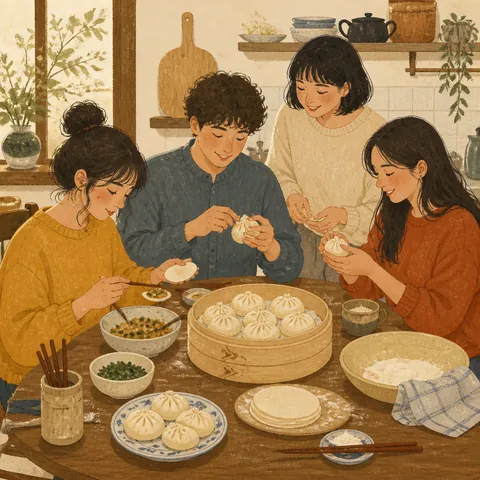
安娜:我学会了包包子。
马克:我会包。这是筷子。
刘明:盘子和勺子在这儿。
李文:包子很甜。我吃饱了。
 HSK 3
HSK 3 Say you can wrap buns, feel full, taste sweet food, and name chopsticks, a plate, and a spoon.
New HSK Course 3, official lesson 18, part 1 of 2.
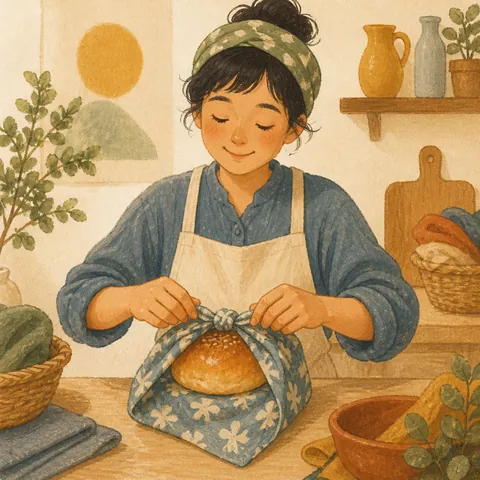
can; to know how
会 is a learned ability, not only future time.
Put 会 before the verb.
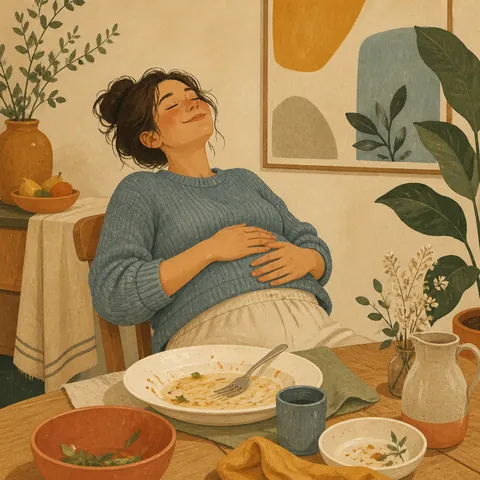
full (from eating)
饱 is the comfortable full feeling after a meal.
Put 饱 after 吃.
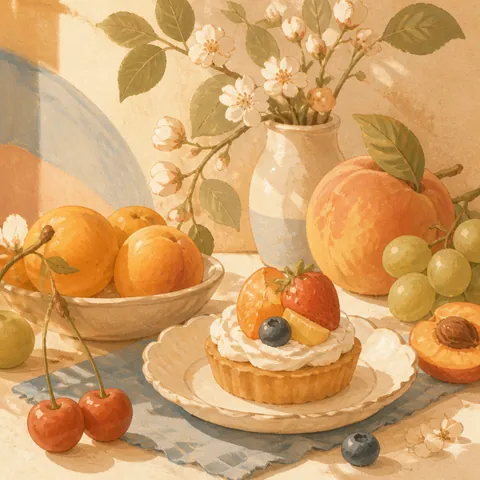
sweet
甜 is a sweet taste.
Put 很 before 甜.
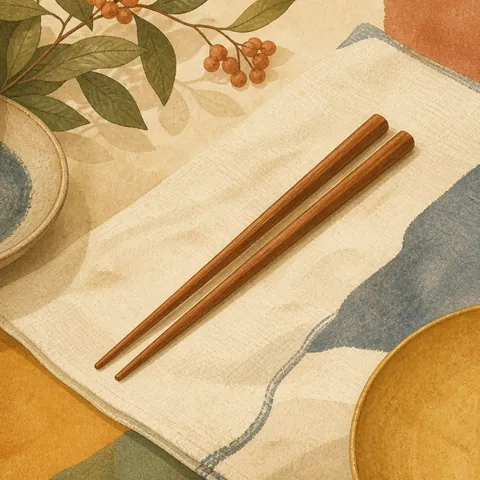
chopsticks
筷子 are the two sticks for eating.
The second syllable is often light.
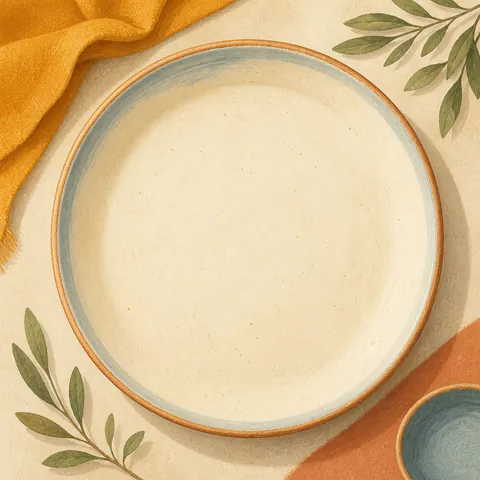
plate
盘子 holds the food.
The second syllable is often light.
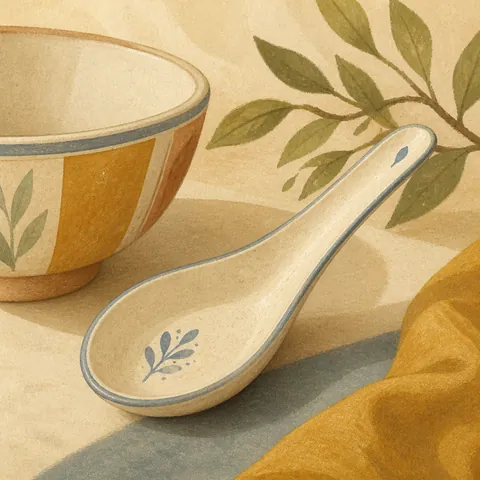
spoon
勺子 is for soup or rice.
The second syllable is often light.
Pick one item from each column. When all three belong together, they lock in as a match.
学会 plus the action means the skill is yours now.
学会 means you can do it now. 我学会了包包子 uses 会, which is new here, plus 包, which you already know. The textbook title uses 饺子; this app lesson uses 包子 from earlier study.
Translate: I know how to wrap them.
Put 会 before the verb.
Write the Chinese word for "spoon".
勺子 is for soup or rice.
Continue in order when you can. You can also open any app lesson whenever it is useful.
包包子
安娜:我学会了包包子。
马克:我会包。这是筷子。
刘明:盘子和勺子在这儿。
李文:包子很甜。我吃饱了。
Choose the best answer for each question.
Write one sentence saying you have learned how to make steamed buns.
Type your answer in Chinese or English where it fits.
Which new word means "can"?
Type your answer in Chinese or English where it fits.
Which new word means "spoon"?
Review this app lesson whenever you need it, or continue when you feel ready.
Would you like more lessons like this one?