为什么搬到这里
Why the move works well
安娜:这里的环境挺好的。
小李:邻居也都很好。
马克:楼里有电梯,附近还有超市和公园。
小李:所以我们搬到这里了。
 HSK 3
HSK 3 Describe the surroundings, neighbors, building elevator, and useful places near a new home.
New HSK Course 3, official lesson 3, part 2 of 2.
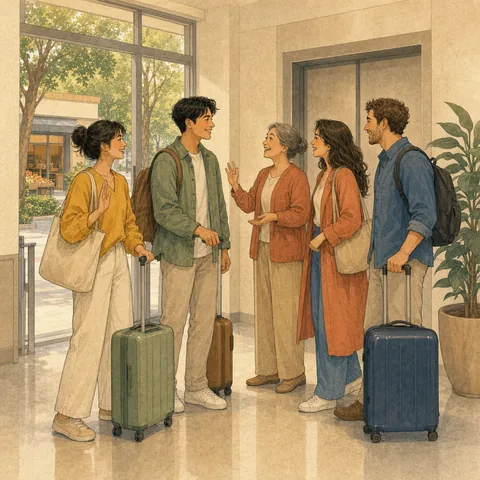
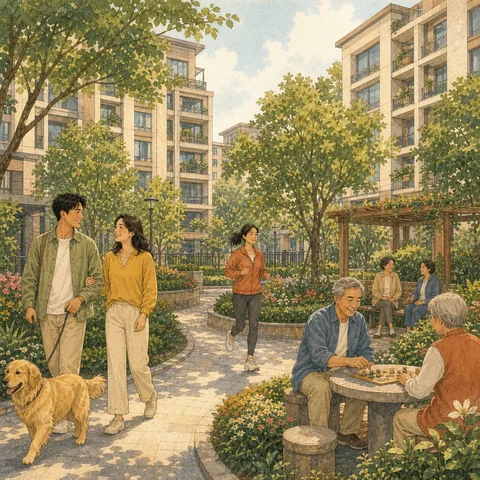
environment; surroundings
环境 covers the feeling of the place: clean, green, quiet, or comfortable.
Use 的 after a place: 这里的环境.
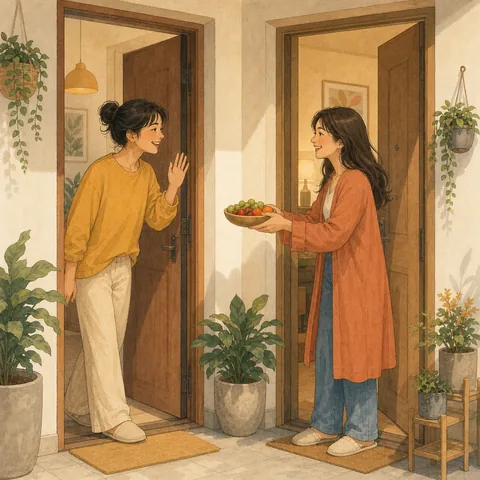
neighbor
Neighbors matter when describing what it feels like to live somewhere.
Say 我的邻居, 我们的邻居, or 新邻居.
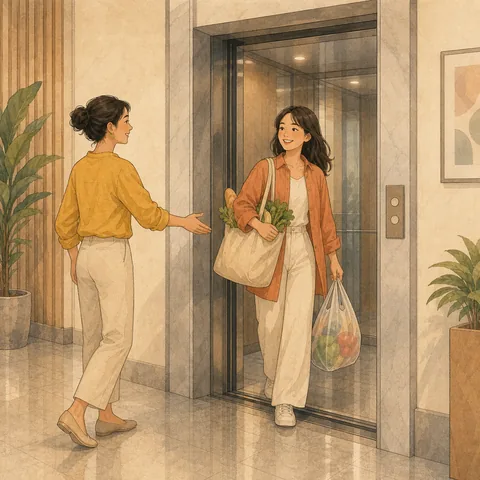
elevator
A useful word when talking about apartment buildings.
Use 有电梯 to say a building has one.

supermarket
A common reason a place feels convenient.
Put location first: 小区附近有超市.

park
Parks help describe the neighborhood environment.
Use 公园 with 附近有 to say there is a park nearby.

to move; to move house
搬 is used when changing homes or moving things.
Pattern: 搬到 + place.
Pick one item from each column. When all three belong together, they lock in as a match.
Keep using 挺 plus an adjective plus 的 to give a friendly evaluation of the surroundings or neighbors.
Use 挺…的 to give a natural, friendly opinion. It means pretty or quite, and it often sounds warmer than a plain 很 sentence.
Translate: The surroundings here are pretty good.
Use 的 after a place: 这里的环境.
Write the Chinese word for "to move".
搬 is used when changing homes or moving things.
Continue in order when you can. You can also open any app lesson whenever it is useful.
为什么搬到这里
安娜:这里的环境挺好的。
小李:邻居也都很好。
马克:楼里有电梯,附近还有超市和公园。
小李:所以我们搬到这里了。
Choose the best answer for each question.
Write one sentence listing a supermarket and park nearby.
Type your answer in Chinese or English where it fits.
Review official lesson 1: Say that the two people look a little alike.
Type your answer in Chinese or English where it fits.
Review official lesson 2: Tell friends to order whatever they want to eat.
Type your answer in Chinese or English where it fits.
Review official lesson 3: Say that the neighborhood is pretty quiet.
You have reached the textbook self-assessment point. Take a moment to review official lessons 1 to 3 before continuing.
Would you like more lessons like this one?